
Guides & Resources
Representing Yourself in Court? Seven Organizational Mistakes That Can Make Your Case Harder
Representing yourself in court can be one of the most demanding experiences a person faces.
Whether you’re involved in a civil dispute, landlord-tenant matter, business disagreement, or another legal proceeding, preparing without an attorney requires time, attention, and organization.
Many self-represented litigants face similar challenges.
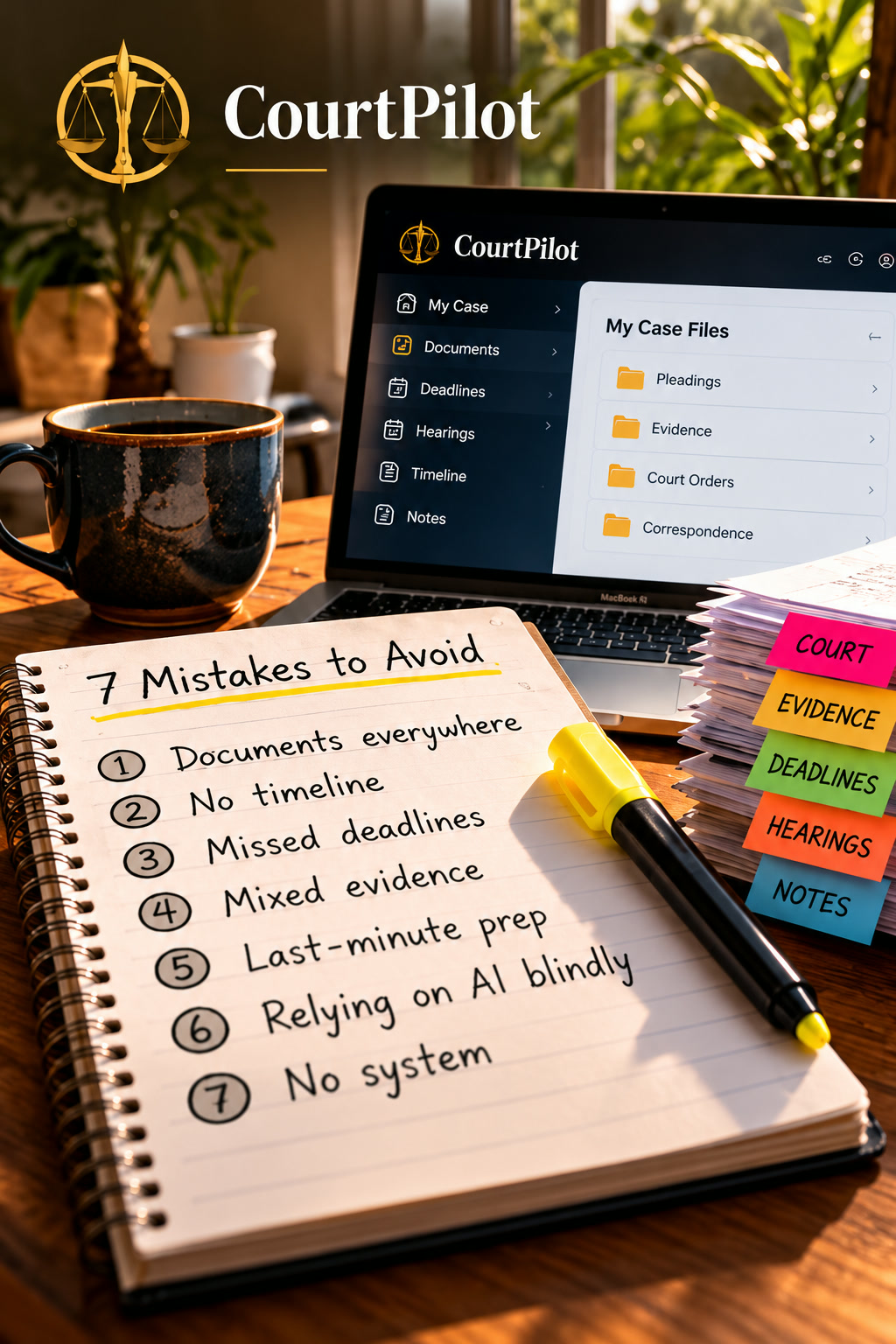
Here are seven organizational mistakes worth avoiding.
Seven Organizational Mistakes to Avoid
1. Keeping Documents in Too Many Places
Court notices, motions, emails, evidence, and correspondence can quickly become scattered across devices and folders.
Creating one organized location for case materials makes information easier to locate when needed.
2. Failing to Maintain a Case Timeline
A case can involve dozens of events over months or years.
Keeping a chronological record of filings, hearings, communications, and important developments can help you understand what happened and when.
3. Relying on Memory for Deadlines
Missing a deadline can have serious consequences.
Maintain a calendar of important dates, verify deadlines using court orders and applicable rules, and set reminders.
4. Mixing Evidence With General Correspondence
Evidence, court filings, and everyday communications serve different purposes.
Keeping these materials in clearly labeled categories can make case preparation more efficient.
5. Waiting Until the Last Minute to Prepare
Preparing for a hearing often requires reviewing previous filings, organizing supporting materials, and understanding the matters scheduled for consideration.
Beginning early can reduce avoidable stress.
6. Relying on AI Without Checking Its Work
Artificial intelligence can help summarize documents and organize information.
However, AI can also make mistakes, omit important details, or misunderstand legal language.
Always compare AI-generated information with original documents and official sources.
7. Trying to Manage Everything Without a System
A court case involves more than individual documents.
It involves relationships between events, deadlines, filings, evidence, and tasks.
A consistent organizational system can help bring those pieces together.
How CourtPilot Fits In
CourtPilot is being developed to help self-represented litigants organize documents, case activity, deadlines, hearings, and evidence in one workspace. Learn more about its features or read our frequently asked questions.
The platform is designed to support preparation and organization—not to provide legal advice or replace a licensed attorney.
The goal is simple: spend less time searching for information and more time preparing.
Looking for court forms and official self-help? Find Your State’s Court Resources — free, no CourtPilot account required.